Mindsets
Technology advances rapidly, and cameras are now very advanced. However, our thinking about photography and camera usage hasn’t changed much since the days when we used to buy film to put in our cameras. It’s time to exploit camera technology to our advantage and maybe challenge some of the concepts and thinking around how we use our cameras.
Exposure Triangle – Not very useful
I find the exposure triangle confusing and misleading. Despite its name, it doesn’t explain exposure or help us understand the relationship between aperture, shutter speed, and ISO.
Understanding Exposure
Exposure is primarily determined by light. Our camera determines an exposure setting based on the ISO setting in use and the brightness of the subject or scene. By combining these two values, the camera calculates an appropriate aperture and shutter speed combination to expose the scene without resulting in underexposed or overexposed images.
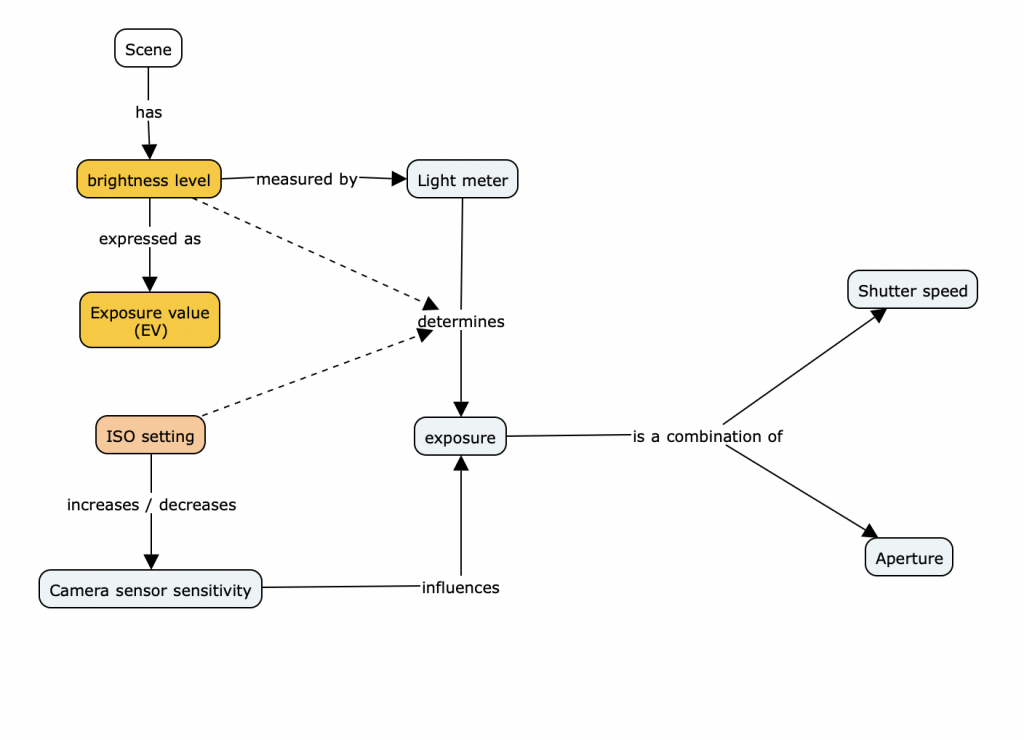
ISO is not directly part of the exposure triangle. However, it does influence the sensitivity of our camera sensor, thereby affecting the range of aperture and shutter speed combinations that can be effectively utilised. The aperture and shutter speed are the only factors that affect the amount of light entering the camera sensor.
Correct methods for obtaining exposure.
The correct method to achieve an exposure is to set the ISO, meter the subject or scene, and then use or choose a combination of aperture and shutter speed recommended by the camera.
Auto ISO & Manual mode
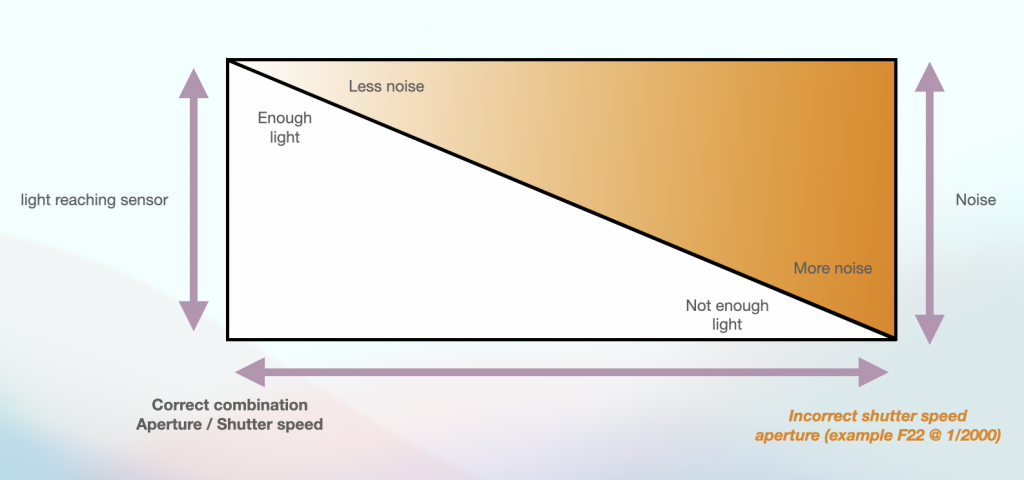
Manual mode and auto ISO have become the new auto mode for many, but they overlook the fact that only aperture and shutter speed control the amount of light reaching the camera sensor. No amount of ISO can compensate for an incorrect combination of aperture and shutter speed. Cameras employ advanced algorithms and consider various data sources, including ISO, lens data, subject matter, and scene brightness to determine the optimal aperture and shutter speed combinations. By disregarding these factors and setting any aperture and shutter speed combination at will, the ISO will try to make up for poor aperture, shutter speed combinations by using higher ISOs than necessary. This can lead to images with increased sensor noise and diminished dynamic range as insufficient light reaches the sensor, necessitating the ISO to compensate..
The Importance of Aperture & Shutter Speed
The aperture and shutter speed control the amount of light reaching the camera sensor.
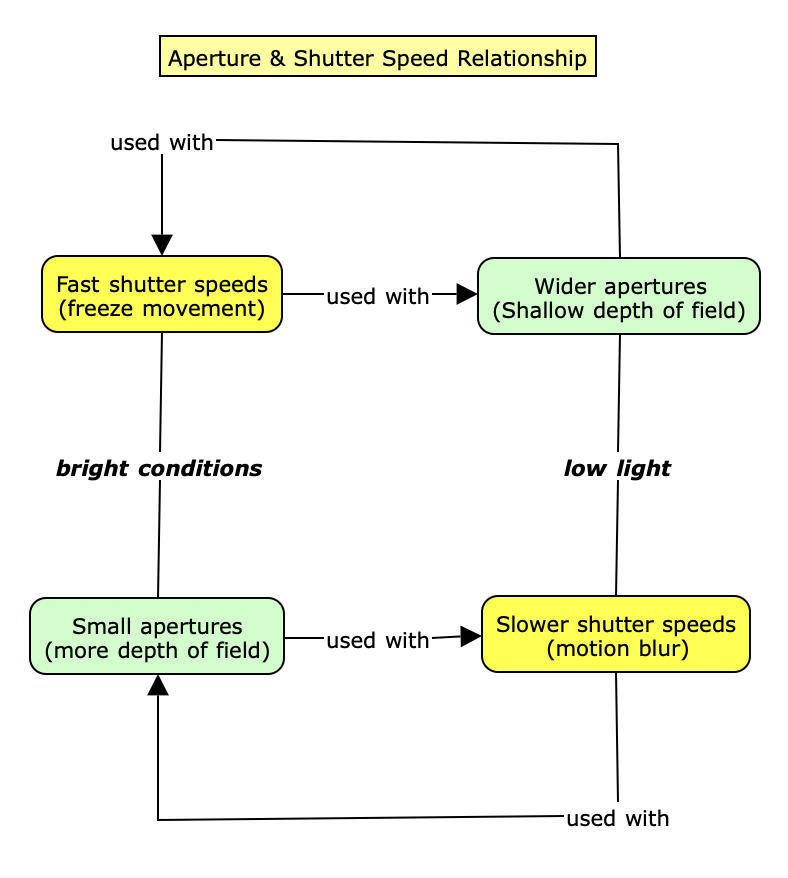
Bright conditions typically necessitate the use of smaller apertures and faster shutter speeds to capture a scene. Conversely, in low light conditions, wider apertures and slower shutter speeds are employed to allow an increased amount of light to reach the camera sensor.
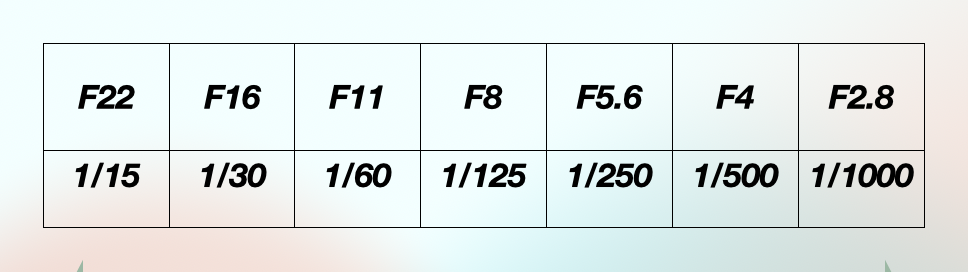
The relationship between aperture and shutter speed in terms of how much light reaches the sensor (aperture) and for how long (shutter speed) enables us to combine various apertures with shutter speeds to maintain a proper exposure. Typically, when one parameter is adjusted, the other must be adjusted as well. For instance, if the aperture is set at f8 and the shutter speed is 1/125s, and the aperture is then opened up to f4, the shutter speed will need to increase to 1/500 to compensate for the increased amount of light reaching the camera sensor. This allows us to use aperture and shutter speeds creatively.
Camera modes
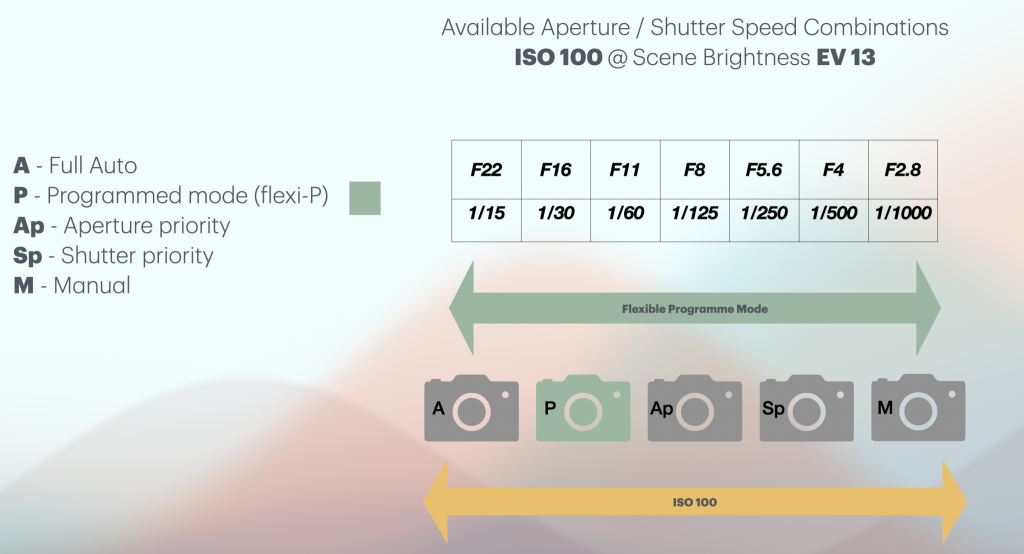
Regardless of the camera mode selected, the same aperture and shutter speeds are available for a given ISO and scene brightness level. For instance, setting the ISO to 100 and if the scene’s brightness, as measured by the camera, is EV13, the following aperture and shutter speeds (depending on the lens) would be available in each camera mode, with the exception of full Auto-mode, where the camera will select the most appropriate aperture and shutter speed combination based on the ISO and brightness level of the scene.
So, in a sense and in terms of exposure, it does not matter which mode is used.
Example using camera modes
If the camera is set to ISO 100 and the brightness of the scene is measured and an exposure value of EV13 is returned in,
Full Auto: The camera employs sophisticated algorithms and scene recognition technology to determine the optimal aperture and shutter speed combination for the photographer, ensuring optimal exposure in various lighting conditions.
Programmed Mode: The camera employs advanced algorithms and scene recognition technology to automatically determine an aperture and shutter speed combination. However, the photographer retains the option to override the suggested settings and select one of the predefined aperture-shutter speed combinations.
Aperture Priority Mode: The camera is already set to ISO 100. If we select f8 as the aperture, the exposure value is EV 13. Therefore, the only shutter speed that can be returned is 1/125s.
Shutter priority Mode: The camera is already set to ISO 100. If we select 1/125s as the shutter speed, the exposure value is EV 13. Therefore, the only aperture that can be returned is f8.
Manual Mode: When we set either the aperture to f/8 or the shutter speed to 1/125 seconds, our camera meter will indicate zero exposure when the combination of aperture and shutter speed is f/8 at 1/125 seconds.
Regardless of the camera mode, the same combination of aperture and shutter speeds will be available for a specific ISO and scene brightness level or EV.
Control or Constrain
The debate surrounding the optimal camera mode is somewhat flawed, as the same combination of aperture and shutter speeds is accessible regardless of the selected camera mode.
Terms such as “control your aperture,” “control your shutter speed,” or “use manual mode” to achieve complete control over your camera are misleading because, in reality, we are merely limiting the camera’s capabilities.
When we replace the term “control” with “constrain,” for instance, “constrain your aperture,” “constrain your shutter speed,” or we switch to manual mode, constraining ISO, shutter speed, and aperture, we are essentially preventing the camera from selecting certain settings for us.
How many modes
It is arguable that modern cameras only require three modes: Fully Auto, Programmed mode, and Manual mode. After all, aperture priority and shutter priority are essentially synonymous, representing two facets of the same concept. It is also arguable that precise control of aperture or shutter speeds is rarely necessary, and if essential, there are alternative methods to achieve the desired effect.
Full Auto Mode
Modern cameras use intelligent algorithms and scene recognition technologies, offering comprehensive automatic control over exposure, focus, ISO, white balance, picture control, and other settings. They intelligently adapt to various scene conditions and even identify subjects such as people to optimise images for seamless point-and-shoot usage or casual photography.
Programme mode
Flexible Programme mode, often labelled as “P” on your camera dial, creates a balance between automation and artistic freedom. the camera automatically selects the aperture and shutter speed based on its exposure algorithm and sometimes other data, like subject, scene or the focal length of the lens in use, if the chosen aperture and shutter speed does not meet your needs you can quickly “shift” the combination of aperture and shutter speed to a more fitting one. This ‘shift’ function lets you scroll through all available aperture and shutter speeds for a given ISO and scene brightness.
In Programme mode, the camera automatically adjusts the aperture and shutter speed to achieve a balanced exposure based on the lighting conditions and the ISO setting. This allows the photographer to focus on their subject, composition, and the timing of the shot without the need to adjust the camera settings.
Programme mode optimises aperture and shutter speed to provide a balanced exposure, eliminating the need for manual adjustments as in Aperture, Shutter or Manual modes. As an example, when shooting outdoors, Programme mode might advocate using F11 @ 1/125s. Suppose we then move indoors, without the photographer doing anything, Programme mode will optimise the aperture and shutter speed to, let’s say, F2.8 @ 1/30s. If we were in Aperture or Shutter Priority mode, we would need to change our aperture or shutter speed, guessing what the optimum values should be. Programme mode simply calculates this based on the exposure algorithm, setting both the aperture and shutter speed for us. If we do not like the recommended settings, we can then shift or bias the aperture-shutter speed combination ourselves, normally by rotating one of the command dials on our camera.
Programme mode, allows users gain access to various camera settings, including auto exposure lock, white balance, metering modes, exposure compensation, auto focus modes and other settings, making it a highly versatile mode of operation.
In my opinion, Programme mode is often misperceived and should be the default mode of operation for most situations.
Manual mode
Manual mode offers the least flexibility, limiting the camera’s ability to autonomously select the optimal aperture, shutter speed, white balance, and ISO settings. While Auto ISO (with the aforementioned caveat) and Auto white balance remain available, manual mode essentially restricts the camera’s functionality and hinders the full utilisation of the technology it incorporates. Manual mode is arguably the most practical mode of operation, particularly when employing flash photography, working in a studio setting, or utilising a handheld light meter.
Changing our mindset
Modern camera technology has evolved so much that shooting in manual mode is no longer a necessity. What is a necessity, though, is for photographers to learn how to exploit this technology to their advantage.
Intelligent autofocus systems, sophisticated metering, and powerful image processors enable cameras to analyse scenes instantly and adjust settings like shutter speed, aperture, ISO, and white balance with precision. Features like face and eye detection, real-time subject tracking, and advanced scene recognition allow cameras to adapt to changing light, movement, and composition faster than humans. Combined with higher dynamic range (HDR) capabilities, these innovations free up photographers to focus on creativity and composition rather than on technical adjustments. We must learn how to use our camera settings effectively to free up our focus on our subject.
The creative triangle
Instead of the exposure triangle, we should concentrate on what I am referring to as the “creative triangle1,” which involves determining the optimal approach to capturing our subject. This triangle encompasses composition, lighting, and the timing of our photograph, considering the location, time, and precise moment to press the shutter button.
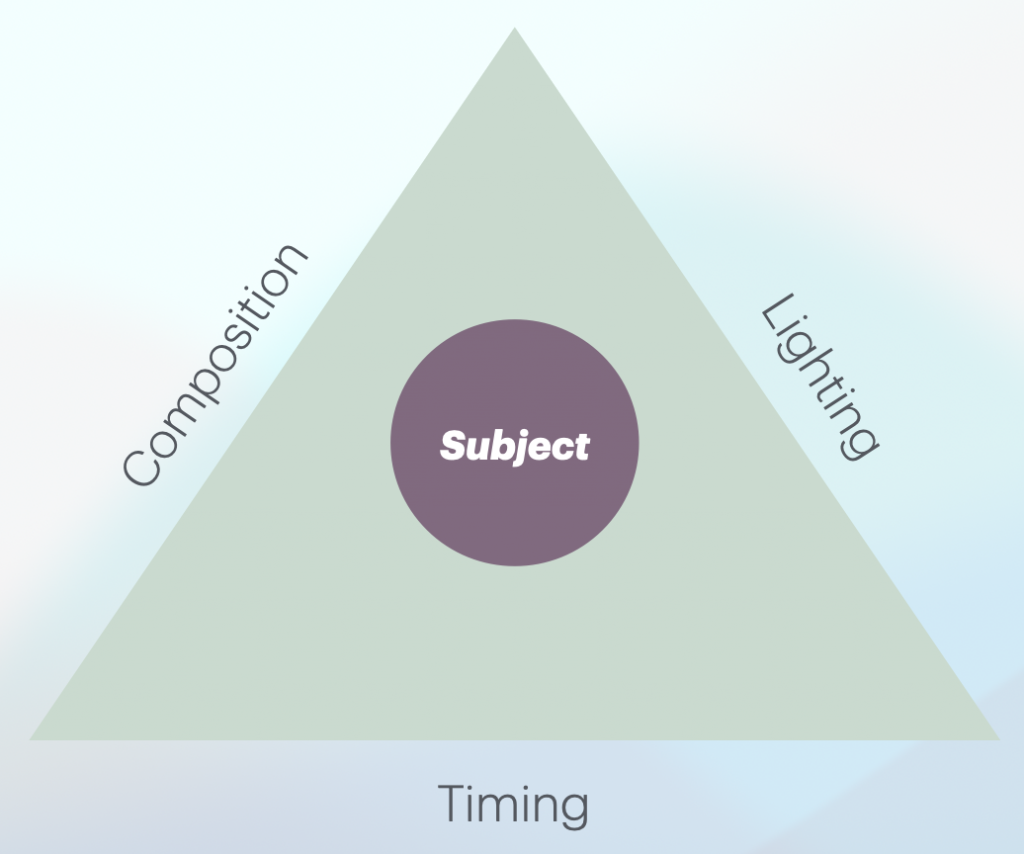
Subject – what you’re capturing, be it a person, landscape, or object
Composition -involves framing and drawing attention to your subject, telling a story.
Lighting – mood and exposure of your shot. Consider natural light, artificial light, shadows, and directionality to highlight your subject.
Timing – time of day, right time to press the shutter, right moment to capture your subject at its best
Alternative view of photography
This post presents an alternative perspective on photography and aims to prompt photographers to reconsider their camera usage. It also serves as a constructive critique of the prevailing notions on social media and other platforms, as well as the conventional methods of presenting and instructing camera usage.
- Creative triangle Image and concept copyright SM Yates 2025 ↩︎


Start the discussion